The short answer
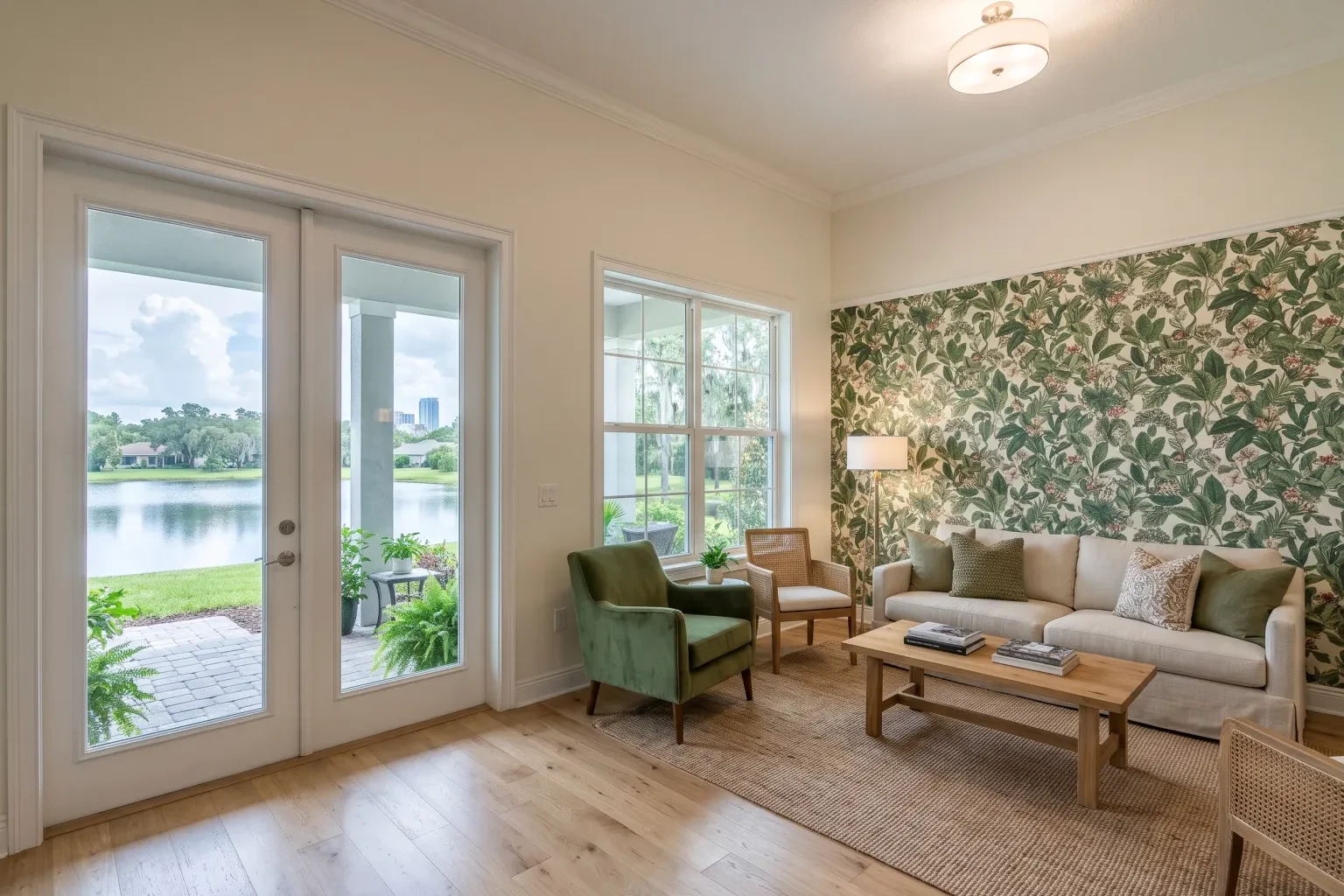
A mural suits one uninterrupted wall that people see head-on, ideally with few outlets, vents or windows breaking the image. We repair and prime the surface, map the panels to the wall before pasting anything, and hang from a plumb center line so the picture stays level and aligned.
A mural is a single image split into numbered panels, and the whole thing only works if every panel lands in its exact spot. Shift the first drop by a quarter inch and a horizon tilts, a tree trunk breaks, or a child's name splits awkwardly across a door frame. Specialist Wallpaper Installer installs printed wall murals in Orlando and nearby cities, from forest scenes in nurseries to oversized botanical prints in dining rooms and photo murals in home theaters. Below you will find how we judge whether a wall is right for a mural, the prep that keeps the image crisp, our step-by-step layout and hanging method, the things that change the size of the job, and simple upkeep advice.
Choosing the right wall for a mural
The best mural walls share three traits: they face the main entry point of the room, they are fairly unbroken, and they are wide enough to let the image breathe. A bedroom wall behind the headboard, the long wall of a dining room or the end wall of a hallway are classic choices.
Walls loaded with windows, thermostats and switch plates chop the picture into fragments, and a design that looked dramatic in a catalog can feel cluttered. Before you order, we can measure the wall and help you check how the artwork will crop at the edges, since most murals are printed slightly oversized to allow for trimming.
Material also plays into room choice. Paper-based murals look soft and matte and fit bedrooms and living spaces. Vinyl or coated murals handle kids' rooms, playrooms and hallways where hands and backpacks rub the wall.
Surface preparation that protects the image
A mural shows every flaw beneath it, because large areas of color and photographic detail reveal dents and ridges that a busy small pattern would hide. Our prep usually includes the following.
- Removing outlet covers, switch plates and any fixtures mounted on the wall
- Patching dents, nail holes and cracks, then sanding them flush
- Skim coating textured drywall when the texture would show through thin paper
- Washing off grease or residue, which is common on kitchen-adjacent walls
- Applying a white or lightly tinted wallcovering primer so colors print true and the panels can be repositioned during hanging
Our installation sequence
First, we unpack the panels and lay them out in order on a clean floor or table to confirm that every piece is present, numbered correctly and free of print defects. If a panel is damaged, it is far better to discover that before the first strip is on the wall.
Second, we measure the wall at several heights, because walls in many Central Florida homes are not perfectly square, particularly in older block construction where the ceiling line can drift. We decide how much bleed to leave at the top and bottom and where the focal points of the image should sit relative to furniture.
Third, we snap a plumb line. Depending on the design, we may start at the center and work outward in both directions, which keeps the main subject centered, or begin at one edge when the artwork calls for it.
Fourth, we paste either the wall or the panel, following the manufacturer's method, and hang each section in sequence. Edges are butted tight and lined up at the image itself, not just at the paper edge, since printing can vary slightly from panel to panel.
Finally, seams get a light pass with a seam roller where the material allows, excess paste is wiped off the face with clean water, and the top, bottom and openings are trimmed with a straightedge and sharp blade. Covers and plates go back on once the paste has set.
Factors that affect the cost
Mural pricing depends on the specific wall and product, so we provide a quote after a site visit or detailed photos and measurements. The condition of the wall is the first variable: a freshly painted smooth wall goes faster than one needing patching or skimming.
The mural material matters. Thin paper tears easily when wet and requires slower handling, while heavier nonwoven or vinyl panels are sturdier but may need a specific adhesive. Custom-sized prints that must fit tightly around built-ins add careful planning time.
Image alignment works like pattern repeat on regular wallpaper: detailed photo murals with fine lines across every seam take longer to match than an abstract wash of color. Large rooms, tall walls and stair landings that need ladders or scaffolding also extend the work.
Caring for a finished mural
Let the panels dry fully for a couple of days before hanging artwork or pushing furniture against the wall. During our wet summer months, keeping the air conditioning running helps the adhesive cure evenly.
For cleaning, a dry microfiber cloth handles dust. Washable or vinyl murals can take a lightly damp cloth with mild soap; plain paper murals should only be spot-blotted. Avoid harsh cleaners, which can dull the inks.
Strong afternoon sun can fade printed colors over time, so consider blinds or UV-filtering film if the mural faces a bright window.
Mural Installation by city
- Mural Installation in EdgewoodLocal service & repairs
- Mural Installation in Belle IsleLocal service & repairs
- Mural Installation in WindermereLocal service & repairs
- Mural Installation in Lake Buena VistaLocal service & repairs
- Mural Installation in Winter ParkLocal service & repairs
- Mural Installation in KissimmeeLocal service & repairs
- Mural Installation in EatonvilleLocal service & repairs
- Mural Installation in MaitlandLocal service & repairs
- Mural Installation in OcoeeLocal service & repairs
- Mural Installation in Bay LakeLocal service & repairs
- Mural Installation in Winter GardenLocal service & repairs
- Mural Installation in Sky LakeLocal service & repairs