The short answer
Grasscloth suits the classic interiors common in Winter Park, especially studies, dining rooms and bedrooms. Older walls often need a liner, and the fibers need a clean, dry install to avoid stains.
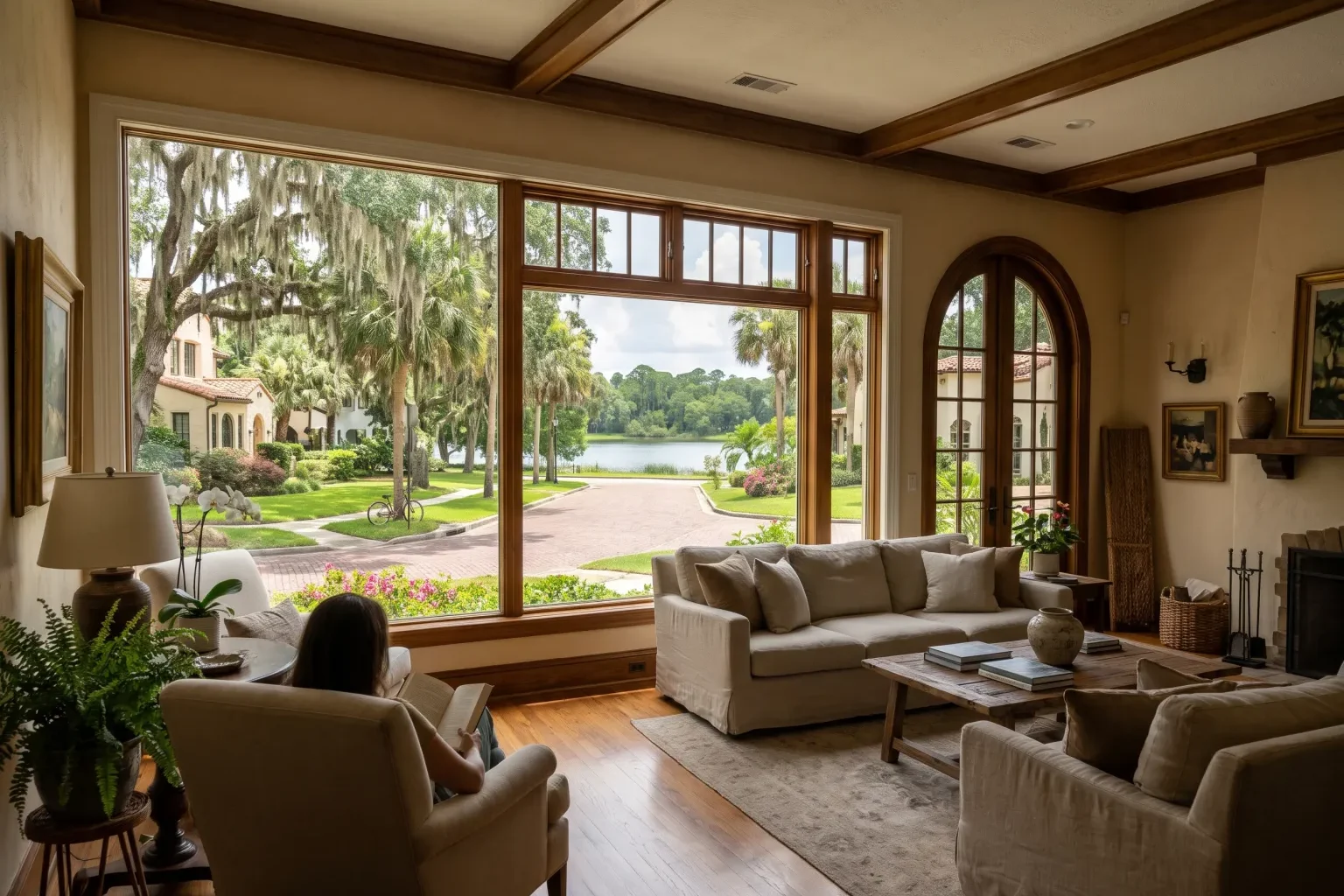
Grasscloth has been used in traditional interiors for generations, and it feels right at home in many Winter Park houses, where painted millwork, built-in bookshelves and hardwood floors are common. The woven texture softens a room, hides minor wall flaws and gives color a depth that paint cannot match. It is also a material that punishes shortcuts. We cover Winter Park and ZIP 32789 from our Orlando base about 10 miles to the south, and we treat every natural fiber job as its own small project, starting with the wall itself.
A natural match for classic rooms
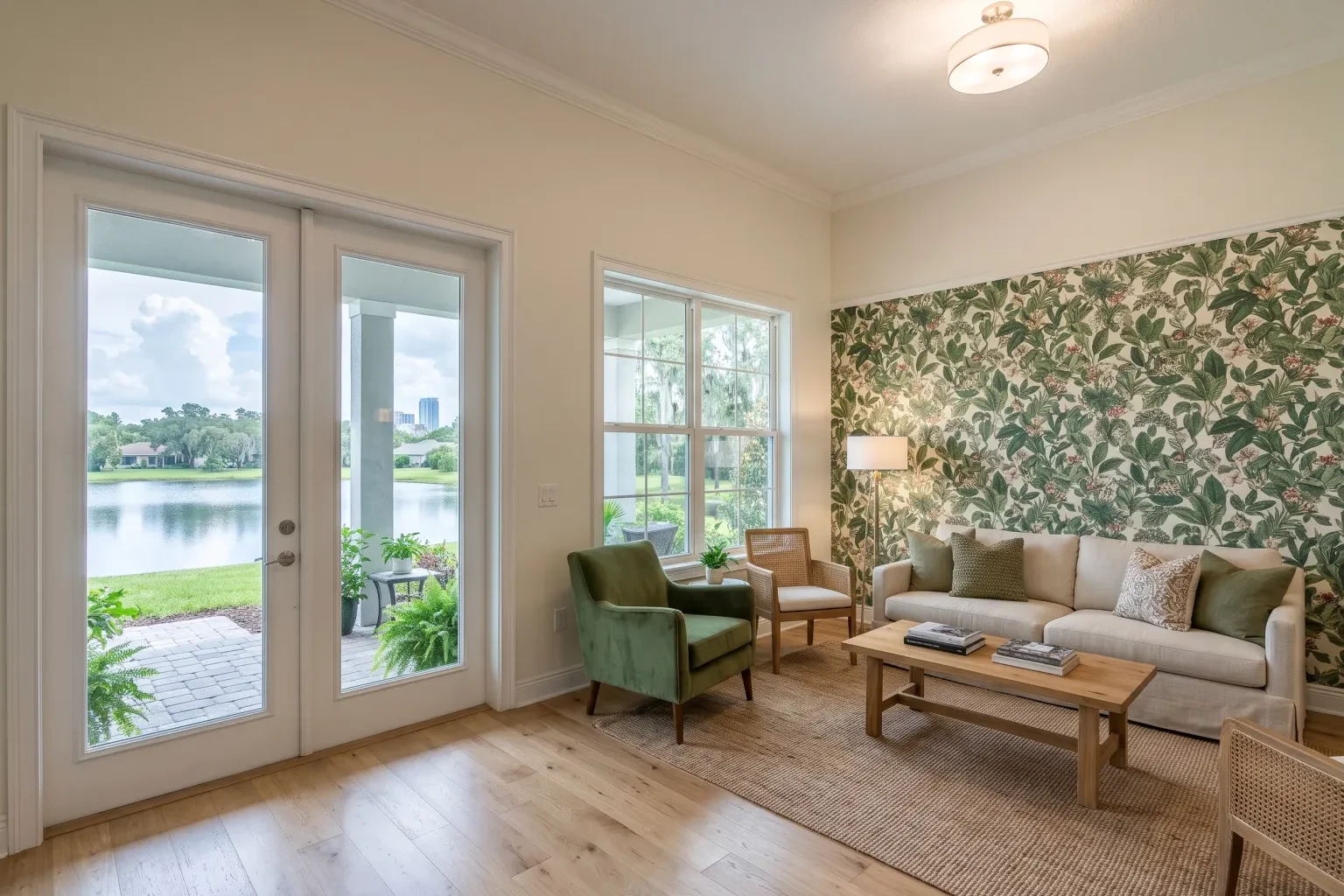
Woven fiber pairs well with painted trim, wood paneling and traditional furniture, but it also works with modern pieces in a renovated home. In Winter Park we most often hang it in dens and libraries, around built-in bookcases, in dining rooms with chair rails, and behind beds in primary suites.
It is less suited to rooms with water. Bathrooms with showers, laundry rooms and kitchen backsplash areas expose fibers to splashes and steam, which can stain or loosen the material. For those rooms, a vinyl that imitates the woven look is the practical alternative.
Why older walls often need a liner
Many homes here have walls that have been patched, repainted and adjusted over many decades. Some are plaster, some are drywall over block, and some are a mix after renovations. Grasscloth is laminated to a paper backing that can transfer stains or shadows from the wall beneath, and it shrinks slightly as it dries, which can pull at weak paint.
A lining paper solves several of these issues at once. It creates a uniform, absorbent surface, bridges hairline cracks, and gives the grasscloth paste an even bond. We hang the liner first, let it dry, then prime it with a tint close to the grasscloth color so tiny gaps between strips do not show a bright base. Not every wall needs this, but older ones frequently benefit.
Understanding color shifts
Plant fibers absorb dye unevenly. Even within one bolt, color can drift from one end to the other, and the shift between adjacent strips can be noticeable. Manufacturers describe this as part of the product's character, and most will not treat it as a defect.
We manage it in a few ways. All bolts are unrolled and compared before any cutting. Strips are numbered and placed so the most similar pieces meet on the main wall, while those with more variation go behind doors or furniture. Many products also call for alternating strips to be hung upside down, which helps even out shading across the width of the wall.
The hanging sequence
Once the wall and liner are ready, installation follows a deliberate order:
- Confirm that all bolts share the same batch number
- Cut strips with extra length for trimming at top and bottom
- Apply paste evenly to the back only, following the manufacturer's directions
- Book each strip briefly so the backing relaxes before hanging
- Butt seams tightly and press them with a dry roller
- Lift any stray paste immediately with a clean, barely damp cloth
- Trim with a fresh blade to avoid frayed edges at ceiling and baseboard
Working around built-ins and trim
Bookcases, window seats and paneled wainscoting are part of what makes grasscloth appealing in these homes, and they are also where the hardest cuts happen. Fibers can fray along a long vertical cut beside a cabinet, and the joint where grasscloth meets painted trim is visible from across the room. We plan each of those edges, cut slowly with a straightedge, and caulk or touch up the trim line only where the manufacturer allows it.
Inside open shelving, grasscloth on the back panel makes books and objects stand out. Those small panels are cut and fitted individually, with the weave running in the same direction as the main wall so everything reads as one material.
Grasscloth in a humid climate
Orlando-area summers bring heat, heavy humidity and frequent storms. Natural fiber responds to indoor moisture, so homes with steady air conditioning are the best setting. Before your appointment, keep the AC running normally so the walls and the bolts can acclimate to the same conditions. Leaving the bolts unopened in the room for a day helps, too.
Sun is the other consideration. Lakefront rooms or west-facing windows can fade fibers over time. Shades or UV-filtering window film slow that process considerably. We install grasscloth in Maitland, Eatonville, Edgewood, Belle Isle and Sky Lake as well.
More services in Winter Park
- Wallpaper Installation in Winter ParkLocal service & repairs
- Wallpaper Removal in Winter ParkLocal service & repairs
- Accent Wall Installation in Winter ParkLocal service & repairs
- Mural Installation in Winter ParkLocal service & repairs