The short answer
Yes, grasscloth works well in Edgewood living rooms, bedrooms and offices when the walls are primed correctly and the panels are hung by hand with clean-face technique. We avoid it in steamy bathrooms and explain the visible seams before you buy.
Grasscloth is woven from plant fibers such as sisal, jute, arrowroot or seagrass and laminated onto a paper backing. It brings a soft, hand-made texture that no printed paper can copy, and it is a natural fit for the relaxed interiors many Edgewood owners are aiming for. It is also one of the least forgiving wallcoverings to hang. The fibers stain if paste touches the face, the color shifts from one bolt to the next, and seams never fully disappear. Our shop in Orlando is roughly two miles southwest of Edgewood, so we can come by, look at your walls in daylight, and talk honestly about where grasscloth will shine and where a different material might serve you better.
What makes natural fiber different to hang
Ordinary wallpaper is designed to match edge to edge so the seam vanishes. Grasscloth is not. Each strip is cut from a bolt of woven fiber, and the shade and density shift slightly along its length. Manufacturers state this in their instructions, and it is part of the charm, but it means the installer has to think about the order of panels instead of simply hanging them off the roll.
Paste is the other challenge. Grasscloth absorbs liquid quickly, and a fingerprint of adhesive on the face can dry as a dark spot that will not wash out. We paste the backing with a measured amount, keep hands and tools clean, and never use a wet sponge across the surface the way we might on vinyl.
- Panels are numbered and hung in sequence to keep color shifts gradual
- Alternate strips are reversed when the manufacturer recommends it
- Seams are pressed with a dry roller, not wiped
- Trimming uses a long straightedge so fibers do not fray at the ceiling line
Edgewood rooms that suit grasscloth
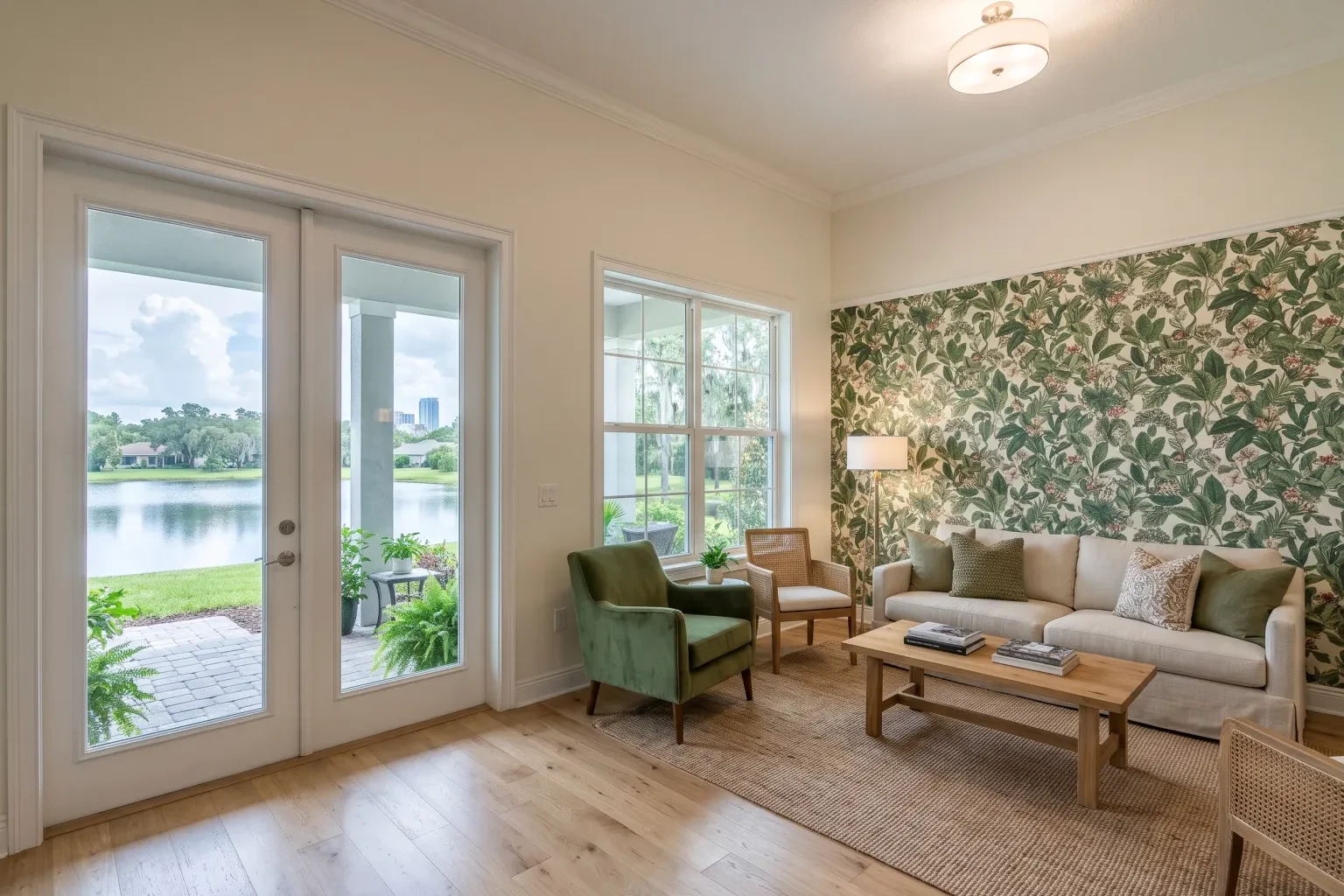
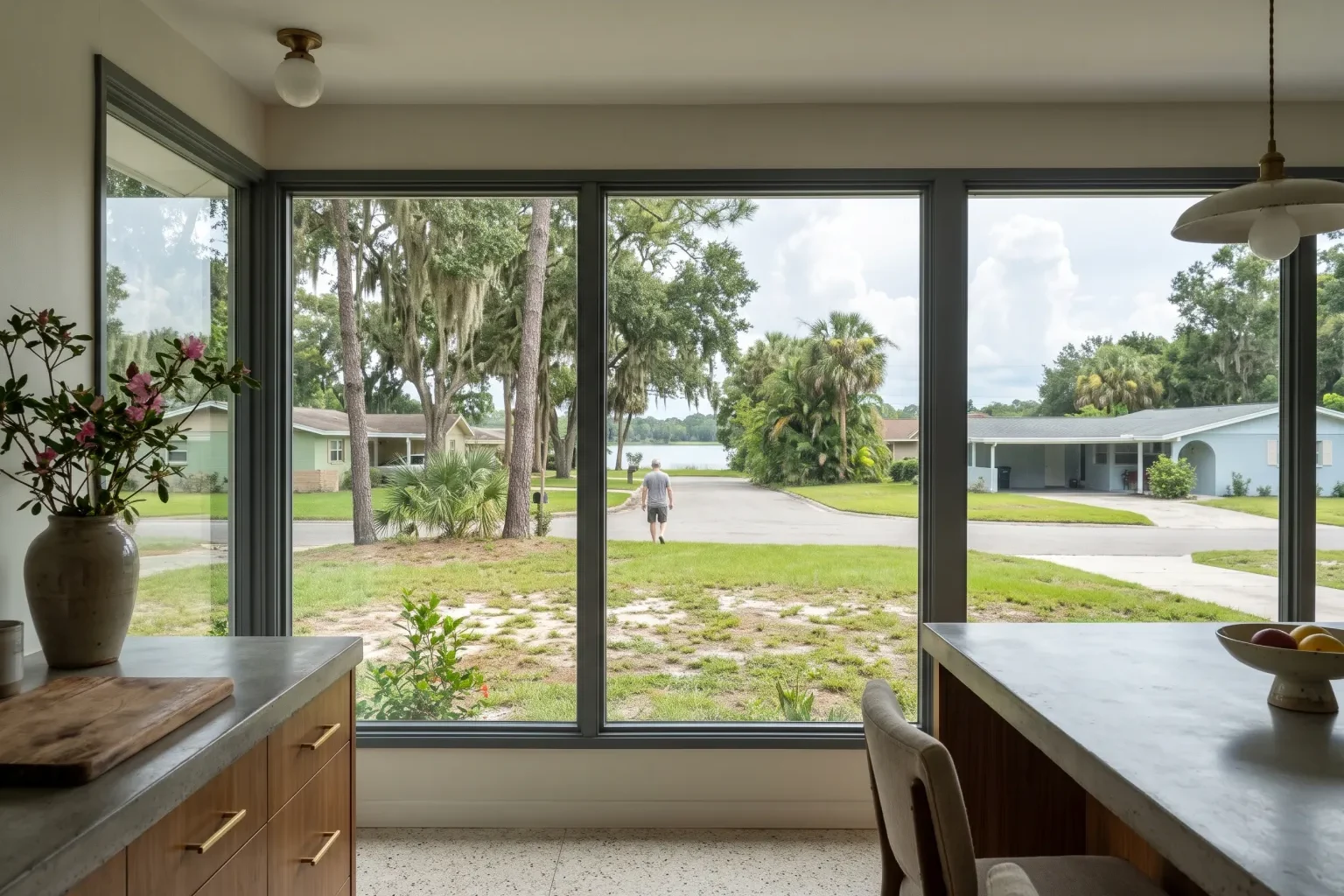
The 1950s to 1970s block ranch houses common in this part of Orange County often have living rooms with low, wide walls and plenty of side light from jalousie-era window openings that have since been updated. Grasscloth picks up that raking light beautifully, giving a plain wall depth without adding pattern. Bedrooms and studies are equally good choices, since traffic is light and nobody brushes against the walls with wet hands.
We are more cautious with full bathrooms, laundry rooms and any wall shared with a screened pool enclosure door that opens all summer. Natural fibers drink in humidity, and during the June through September stretch of hot, sticky weather that can cause swelling or staining. A vinyl product printed to look like grasscloth is often the smarter choice for those spaces.
Preparing walls so fibers stay flat
Because grasscloth is semi-transparent in places, whatever is underneath can show through. A patched wall with bright white compound next to an old beige paint can ghost through lighter weaves. We correct that with a pigmented wallcovering primer, tinted close to the grasscloth color when needed, so the backing sits on one even tone.
Walls also need to be smooth. Knockdown texture will telegraph through thin weaves and create shadows. Where texture is heavy, we skim and sand before hanging, and we let the compound dry fully, which in a humid Edgewood summer can mean leaving the air conditioning on overnight before we return.
Living with grasscloth afterward
Dust the walls lightly with a soft brush attachment every few months. Avoid spray cleaners and damp cloths. Keep indoor humidity steady by running the air conditioning through storm season instead of shutting it off for long stretches while you travel. If a small area is ever damaged, the labeled leftover pieces we leave behind make a patch far easier to blend.
Sisal, jute, seagrass and the look you want
The word grasscloth covers several distinct weaves. Fine sisal has a tight, even texture and reads almost like linen from across the room, which makes it a calm choice for bedrooms. Jute and arrowroot are looser and more irregular, with knots and slubs that catch light; they suit a den or study where you want warmth and character. Seagrass weaves are chunkier still and bring a coastal, casual feel even though Edgewood is inland and closer to lakes than to any beach.
Color matters as much as weave. Undyed natural fibers vary the least from bolt to bolt, while deep dyed colors such as navy or charcoal show shade differences more clearly. If you are torn between two samples, tape them to the wall you plan to cover and look at them in morning light, in late afternoon, and under your lamps at night before deciding.
More services in Edgewood
- Wallpaper Installation in EdgewoodLocal service & repairs
- Wallpaper Removal in EdgewoodLocal service & repairs
- Accent Wall Installation in EdgewoodLocal service & repairs
- Mural Installation in EdgewoodLocal service & repairs